గోదానంGodānam
The timeless offering of a cow: what the tradition says, the two honoured paths, and how Kāmya protects both the giver's intent and the cow's future.
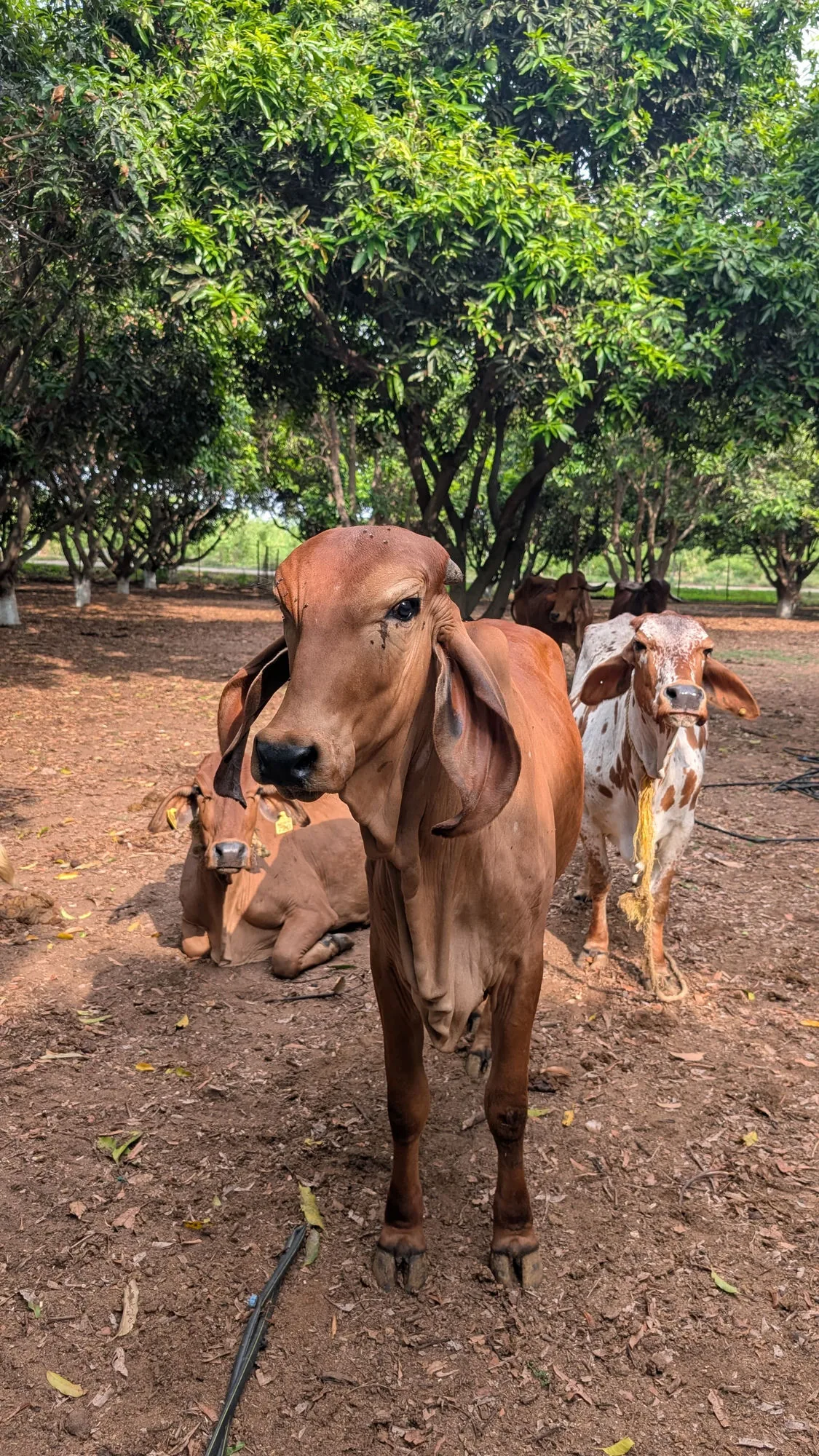
In the Indian tradition, Godānam carries deep spiritual weight: it appears in the Vedas, the Itihasas and in family practice around weddings, Shraddha, Akshaya Tritiya and moments of gratitude. A cow given with reverence is considered the highest dāna, because she goes on giving. Kāmya's responsibility is to make sure that what begins as a sacred act ends as a good life for the cow.
Pratyaksha Godānam · direct
You donate a cow directly into Kāmya's care, or through us to a vetted care arrangement. We apply safeguards: health check, registration into the herd, lifetime-care commitment and no onward transfer for slaughter, ever.
Where we stand, legally
Transporting and transferring cattle in India is regulated, and the rules differ from state to state. So a live-animal Godānam is never a same-day arrangement: we talk to you first, establish that the animal is yours to give and is fit to travel, arrange transport that complies with the law in both states, and document the transfer. If any of that cannot be done properly, we will say no and offer you Paroksha Godānam instead. We would rather decline a donation than move an animal badly.
Paroksha Godānam · in spirit
When keeping or transferring a cow is not practical, you participate in the spirit of Godānam: sponsoring the rescue, care and protection of a cow already at Kāmya, with the same Sankalpa and the same merit of giving.
Every Godānam is discussed personally: your intent, your tradition and the cow's needs.