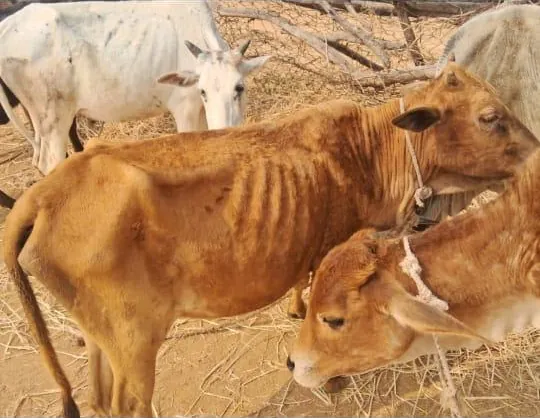
A cow is loaded off a truck, or walks in from a roadside, and someone takes a photograph. That photograph travels. What happens over the following four years does not.
The first month
An animal who has been starving cannot simply be fed a great deal. Rumen function has to be rebuilt slowly, or rich feed will do harm rather than good. The first weeks are small quantities, often, with clean water always available and shade she can reach without walking far.
Hooves are usually the second problem. A cow who has stood for months on hard, wet or filthy ground arrives with overgrown or infected feet, and an animal in foot pain stops walking to the feed trough, which starts the cycle again.
The years after
- Food every single day, not on the days donations arrive.
- Water she does not have to compete for. Bullying at the trough is real, and the weakest animal loses.
- Shade and dry standing ground. Monsoon mud causes more hoof disease than any other single factor.
- Health checks she cannot ask for. She will not tell you her udder hurts.
- Company. Cows are herd animals with friendships. An isolated cow is a stressed cow.
- A calm end. Old cows deserve to be old somewhere quiet, without being moved on because they no longer produce.
Her worth does not end when her productivity ends.
Why this matters for how you give
A single large donation rescues an animal. Repeated small ones keep her alive. Both matter, but the second is the one gaushalas quietly run short of, because it is the one nobody photographs.