In the Vrindavana story, there is a morning when Krishna stops being a keeper of calves and is given charge of the cows themselves. That promotion is what Gopashtami remembers: not a battle, not a victory, but a boy being trusted with the care of animals.
What families do
Cows are washed and their horns are painted or decorated. They are garlanded, fed something sweet, and offered puja before the household eats. In many places the cows are led out and circumambulated rather than the other way round. The gesture is simple and the meaning is not subtle: today, they go first.
Why this day matters at a gaushala
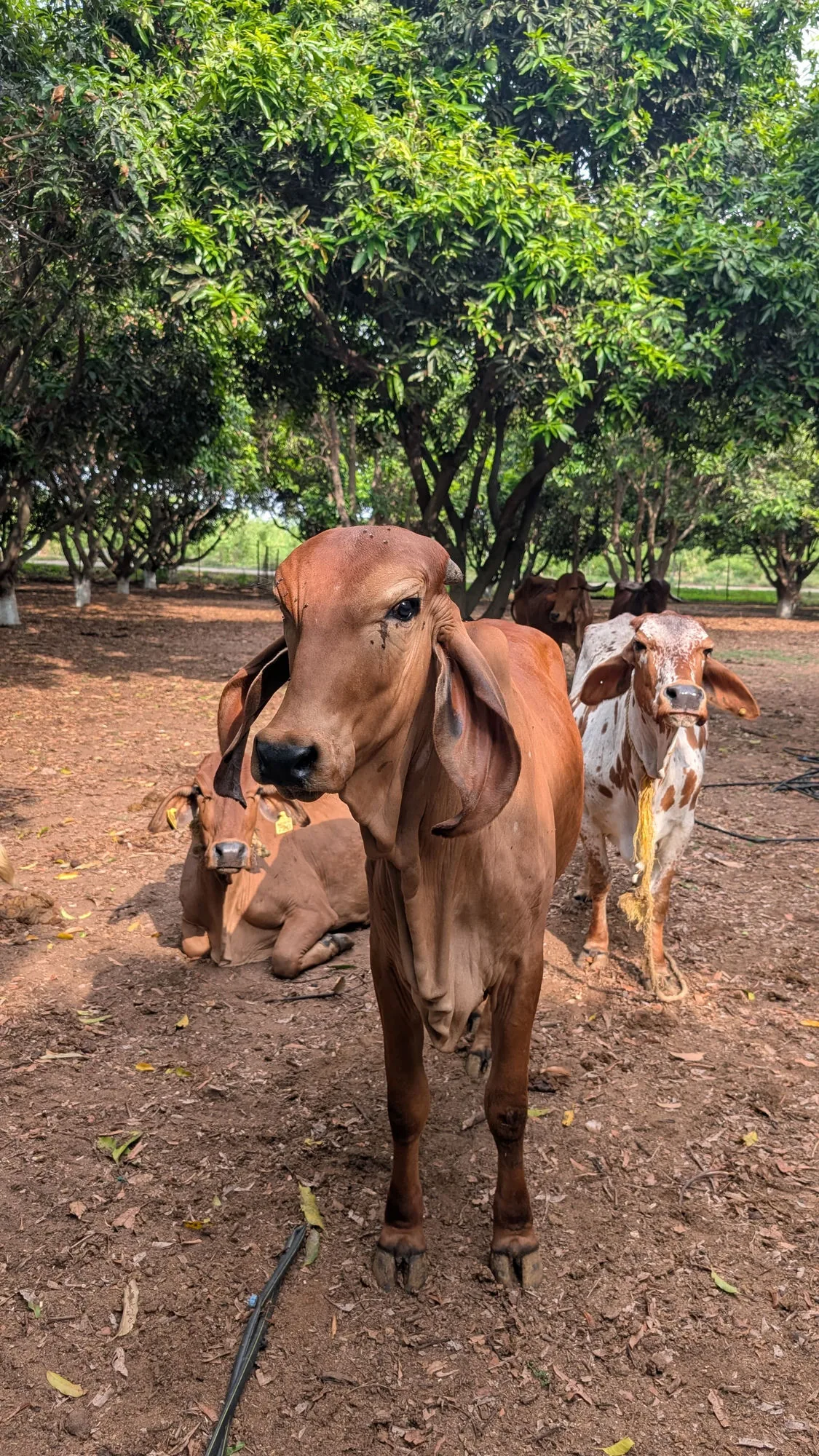
Most festivals ask you to visit a temple. This one asks you to stand in front of an animal. For a gaushala, Gopashtami is the one day of the year when the thing we do every morning without an audience is the thing everyone has come to see.
At Kāmya it is our largest gathering: Go-Puja, procession, Anna Seva, and a full family Seva day. If you visit the gaushala once in a year, this is the day worth choosing.
The quieter observance
You do not need to be in Toopran. Feeding one cow near you, or sponsoring a day of feed here, is an entirely traditional way to keep Gopashtami. The date changes each year with the lunar calendar; our festival calendar computes it for you.
The cow was never separate from the household. Gopashtami just says so out loud, once a year.